Surrender Questions

ColorMeUp

Well-Known Member
I'm looking at the strategy engine for a 6 deck, S17, DA2, DAS, LS game and I have two questions. The strategy indicates for a 16 v 10 to surrender, but STAND if not allowed. If I turn surrender off it says to hit, like I would expect. Is this just an error, or is there something I'm overlooking?

Also, why is it proper to surrender a 15 against a 10 but not an ace?
 
As to your second question, a 10 is the most popular card in the deck. There are thirteen possible cards under the dealers 10, and four of them are 10s. In the case of the dealer showing an Ace, there is no possiblilyy of there being a 10 under it. So there are only nine possible cards under it. In a H17 game, there is only a 3/13 chance the dealer has a pat hand- a 7, an 8 or a 9. Against a 10, there is a 7/13 chance he'll have a pat hand.
 
If you are not allowed to surrender then you must be holding a multi-card 16. In that case it is slightly better to stand because of the extra low cards that are out of the shoe. A 16 vs. 10 is a very close call and sometimes the strategy can be affected by a single card.

-Sonny-
 
If you are not allowed to surrender then you must be holding a multi-card 16. In that case it is slightly better to stand because of the extra low cards that are out of the shoe. A 16 vs. 10 is a very close call and sometimes the strategy can be affected by a single card.

-Sonny-

Ah, that's exactly what I was missing. I know the correct composition dependent play is to stand with a 3 or more card 16 composed of a 4 or 5, but I hadn't thought of that with respect to the surrender situation. Thanks
 
Ah, that's exactly what I was missing. I know the correct composition dependent play is to stand with a 3 or more card 16 composed of a 4 or 5, but I hadn't thought of that with respect to the surrender situation. Thanks

Hmm .. is this from Renzey's book, rule of 4's or something like that? Isn't this an index play in 6d or am I doing something wrong?

BJC
 
Last edited:
Hmm .. is this from Renzey's book, rule of 4's or something like that? Isn't this an index play in 6d or am I doing something wrong?

BJC

The index play is much more important. The 16v10 is otherwise a toss-up pretty much, and worrying about composition is essentially worthless.
 
As to your second question, a 10 is the most popular card in the deck. There are thirteen possible cards under the dealers 10, and four of them are 10s. In the case of the dealer showing an Ace, there is no possiblilyy of there being a 10 under it. So there are only nine possible cards under it. In a H17 game, there is only a 3/13 chance the dealer has a pat hand- a 7, an 8 or a 9. Against a 10, there is a 7/13 chance he'll have a pat hand.

I thought there were 12 possible cards under a dealer's face card. Unless you're playing somewhere where they don't check for blackjack under 10s?
 
The index play is much more important. The 16v10 is otherwise a toss-up pretty much, and worrying about composition is essentially worthless.

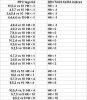
In an old post I had some 16 & 15 vs 10 CD indices I ran using cvdata, but here it is again. There is some differences in the indices based on hand composition but is it worth the extra work? It seems most posters are on the same wave... it's not worth it.

(the standard 16 vs 10 index, not the LS index, in RA RPC & Zen is S>=0)


BJC
 

Attachments

  • cd20results.jpg
    cd20results.jpg
    17.3 KB · Views: 334
Last edited:
may be... I'm sure it's in Revere's Playing Blackjack for a Business

The book was written primarily for pitch games and BS for 4d, although he says that the games should be played the same way. That may have applied at the time of it's publications due to the much better games available at the time. The playing strategies for multideck were sold separately through his business or his web site. So if it is in PBJaaB, then it's not for 6d.

By the way I was only being inquisitive if your were refering to Renzey's book. If you know the page in Reveres book regarding 6d CD plays, please let me know so I can go back and review it.

If you look at the results of the multicard CD I posted above it's a mixed bag when 4's and 5's are in the mix so multicard 16's vs 10 is a toss up. If you notice in the schedule above, if there is a both 4 & 5 in the hand maybe you should lower your index by 1 integer.

But then again, when flooring, rounding, or truncating the indices, the true fractional value of the indices may be so close it's not worth the extra effort to learn CD for multideck games.


Thanks

BJC

 
Last edited:
The book was written primarily for pitch games and BS for 4d, although he says that the games should be played the same way. That may have applied at the time of it's publications due to the much better games available at the time. The playing strategies for multideck were sold separately through his business or his web site. So if it is in PBJaaB, then it's not for 6d.

By the way I was only being inquisitive if your were refering to Renzey's book. If you know the page in Reveres book regarding 6d CD plays, please let me know so I can go back and review it.

If you look at the results of the multicard CD I posted above it's a mixed bag when 4's and 5's are in the mix so multicard 16's vs 10 is a toss up. If you notice in the schedule above, if there is a both 4 & 5 in the hand maybe you should lower your index by 1 integer.

But then again, when flooring, rounding, or truncating the indices, the true fractional value of the indices may be so close it's not worth the extra effort to learn CD for multideck games.


Thanks

BJC

I believe you are correct. When you mentioned the CD plays I just remembered they were in Revere's book.

-db
 
Back
Top